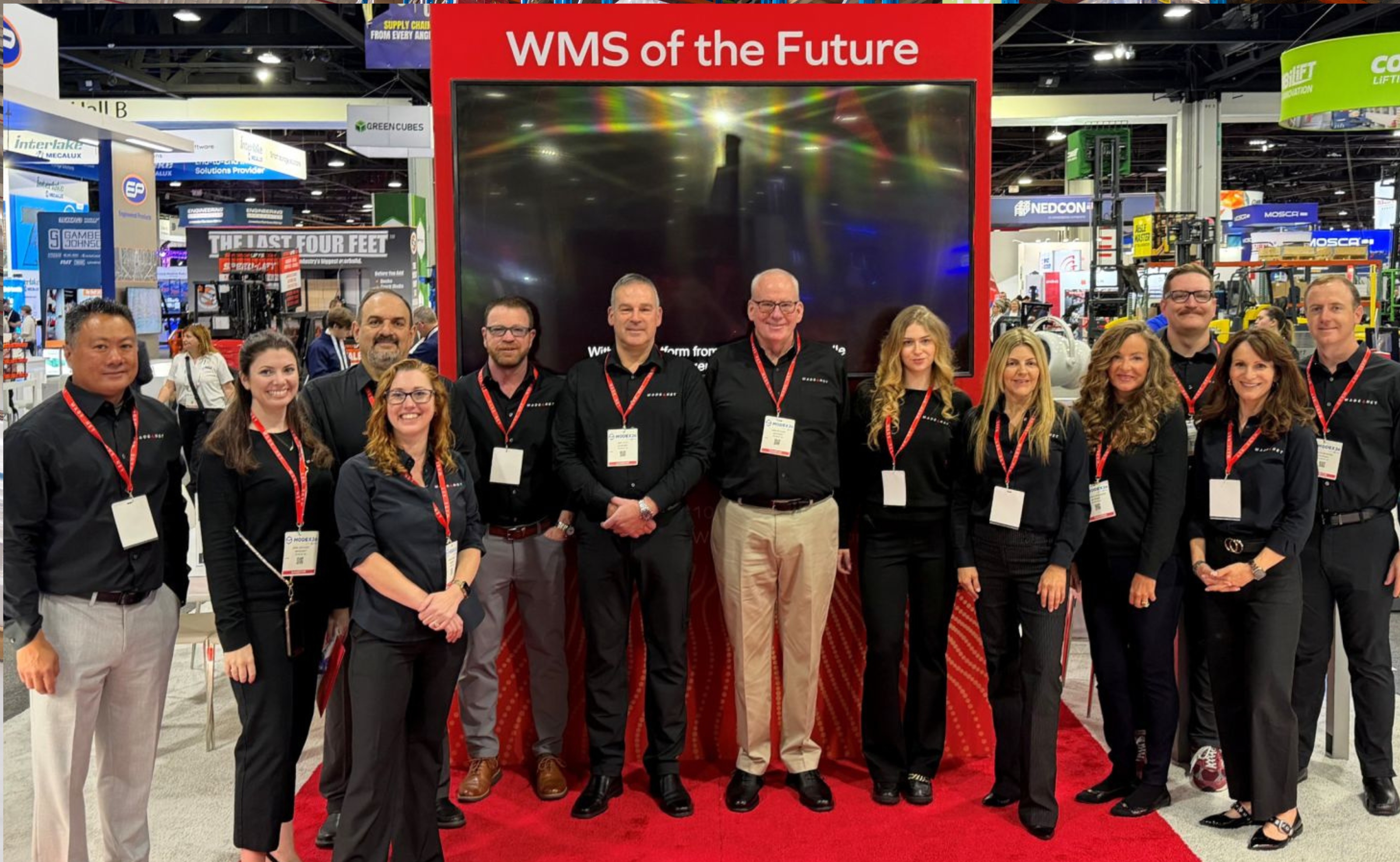
Jeff Jones, Senior Account Executive at Made4net, came away from MODEX 2026 feeling largely vindicated. Before the show opened its doors in Atlanta, he’d made a pointed prediction: most companies walking that floor shouldn’t be buying robotics.
Not because the technology isn’t real—but because “A lot of operations aren’t ready for it—not because they don’t want it, but because the system running their warehouse can’t actually support it. If your operation is still dealing with workarounds to get basic processes done, inventory you don’t fully trust, integrations that barely hold together—robotics isn’t your next step. It’s a very expensive distraction.”
When the doors closed, the show had confirmed what he suspected. Automation continues to mature, AI claims were everywhere, and the fit-versus-features question landed harder than most vendors wanted to hear. “Buyers are looking for foundational solutions they can layer tech on top of,” Jones observed. Carvana’s Camille Blake put it succinctly from the keynote stage: “Capability does not equate to fit”—a line that captured exactly what Jones had been hearing from the floor all week.
The Show in Context
MODEX 2026 was the largest edition of the show to date—more than 1,100 exhibitors and 50,000 supply chain professionals converging on Atlanta’s Georgia World Congress Center. AI was the dominant theme across the floor, with exhibitors large and small positioning their products around it. The frequency of AI claims drew comparisons to past cycles when IoT, Big Data, and cloud computing each had their moment as the industry’s defining buzzword. The technology being demonstrated was often impressive. Whether it fit the operations looking at it was a different question—and increasingly, that’s the one buyers were asking.
What the MHI Report Said
The 2026 MHI Annual Industry Report, co-authored by MHI and Deloitte and debuted during a keynote panel at MODEX, put hard numbers behind what practitioners were sensing on the floor. Titled, Rewiring the Future: A Supply Chain Playbook for Innovation, and drawing from a survey of 500 supply chain professionals, the report identified AI as the most disruptive technology of the next decade—with 70% of respondents holding that view. AI adoption has climbed from 30% of organizations last year to 41% today, a meaningful jump that reflects genuine momentum.
And yet: 28% of respondents aren’t using AI for any supply chain purpose. The gap between those racing toward adoption and those still on the sidelines is wide, and the biggest obstacles cited aren’t technical—they’re organizational. Lack of clear business cases and uncertain ROI timelines were among the top barriers discussed.
Economic uncertainty also ranked as the industry’s foremost concern, and for good reason. Tariffs, geopolitical tensions, and volatile demand are compressing margins and complicating planning cycles in ways that make the case for shiny new technology harder to justify without a clear operational foundation underneath it. Workforce challenges—specifically upskilling and retention in an environment where new workers enter the space boasting familiarity with AI, but are less aligned with traditional data-management roles—rounded out the top concerns.
What Panelists Said
The keynote panel brought the report’s findings into contact with real-world operations, and the message was consistent: technology amplifies what’s already there, good or bad.
MHI CEO John Paxton was direct about AI’s limits: “AI will not fix bad processes.” Frederick Cox, Director of Manufacturing at Disney’s Central Shops, extended that logic to automation broadly. “If you add any type of automation to chaos, it’s just going to speed up the chaos.” These weren’t cautionary footnotes to an otherwise bullish conversation—they were central to it.
Camille Blake of Carvana drew a useful distinction between using AI for analytical insight and deploying it to run operations. Her team starts with high-predictability, routine tasks with lower decision-making risk before expanding AI’s role. The discipline there—knowing what to automate first and why—is exactly the kind of operational clarity that Jones was pointing to before the show began.
Andrew Rice of Gallo added another dimension: solving today’s problem without thinking through how the business will change. His example described a team that perfectly digitized a shipping process built around full truckloads, and how the system ultimately failed when the business shifted to LTL. The technology worked; the planning didn’t account for what came next.
The Question That Keeps Mattering
Jones came away from the show with three clear observations. Automation hasn’t peaked—there’s meaningful innovation still ahead, though the absence of humanoid robots was notable. AI claims were ubiquitous, but credibility varied widely. And the fit-versus-features question cut through the noise in a way that resonated with buyers.
“The real question isn’t: ‘Should we invest in automation?'” Jones said. “It is: ‘Is our WMS actually built to support where we’re going?’ Because automation doesn’t fix misalignment—it amplifies it.”
That is, ultimately, what MODEX 2026 confirmed. The companies that will benefit most from the next wave of automation and AI investment won’t necessarily be the ones that adopted the earliest. They’ll be the ones that built the operational and systems foundation capable of supporting what comes next—and had the discipline to ask whether they were ready before signing anything.
For those looking to go deeper on the trends shaping that conclusion, the full 2026 MHI Annual Industry Report, Rewiring the Future, is available to download here. If you’ve been contemplating a move to more automation or considering AI, reach out to one of our experts to determine whether your operation is ready—and what it takes to get there.